Anthropology has emerged as a highly popular optional subject for UPSC/CSE aspirants aiming to crack the IAS Mains Exam. Its popularity stems from the availability of concise study resources and a syllabus that is relatively more focused and manageable. While some candidates are deterred by the subject's name, the curriculum is scientifically structured to analyze the human condition. Excelling in this paper requires a strong grasp of anthropological concepts and the ability to illustrate answers with well-labeled diagrams, which is essential for securing high marks.
What is Anthropology?
If you are a beginner, your primary goal should be to build deep conceptual clarity. Anthropology is the study of people, past and present, with a focus on understanding the human condition both culturally and biologically through the application of biology, cultural studies, archaeology, linguistics, and other social sciences.
UPSC Anthropology Syllabus 2025
Given its roots in both biological and social sciences, the Anthropology syllabus is a preferred choice for science and humanities graduates alike. The official UPSC Anthropology syllabus for the UPSC CSE (Civil Service Examination) is outlined in detail within this article.
Anthropology Syllabus for Paper 1
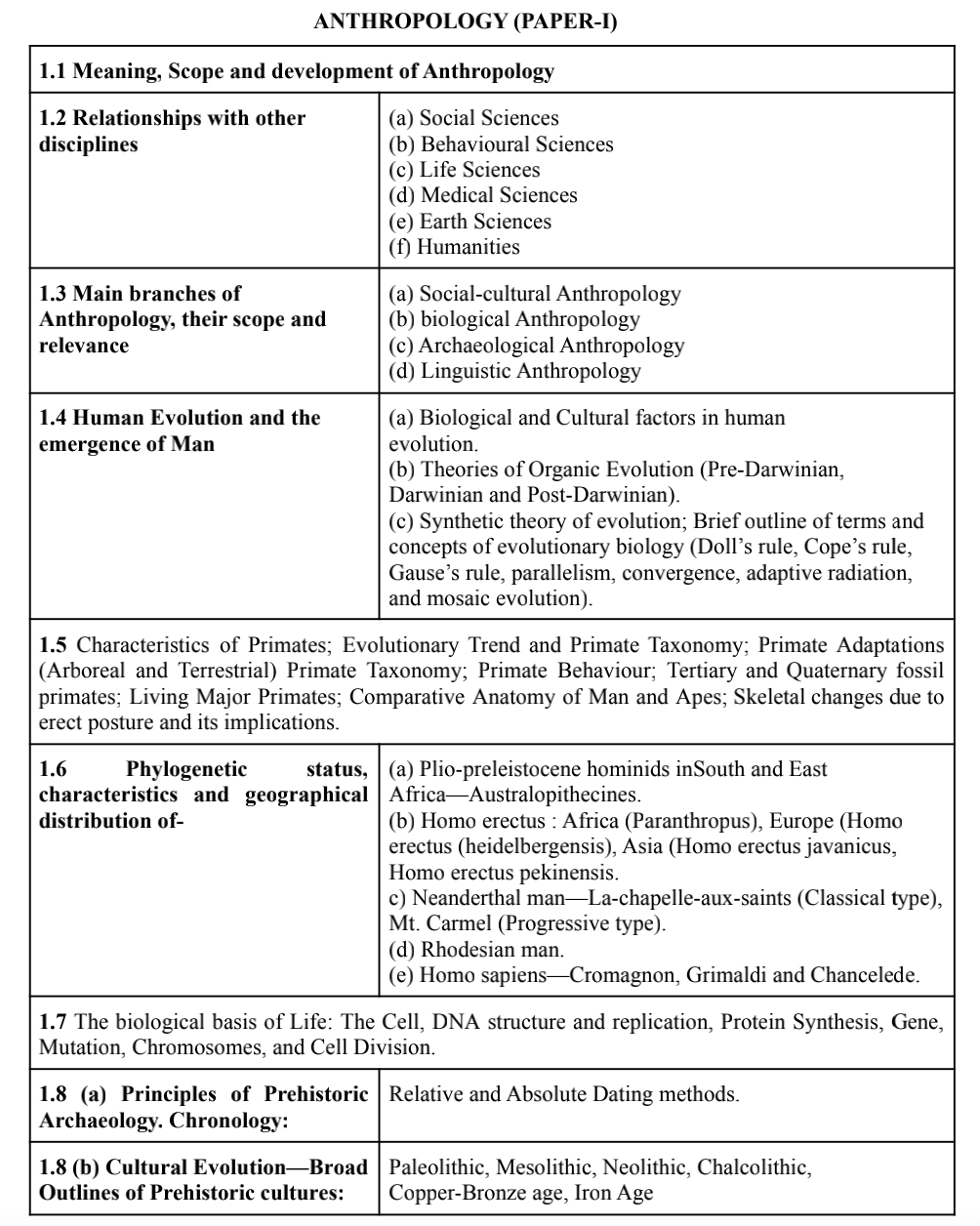
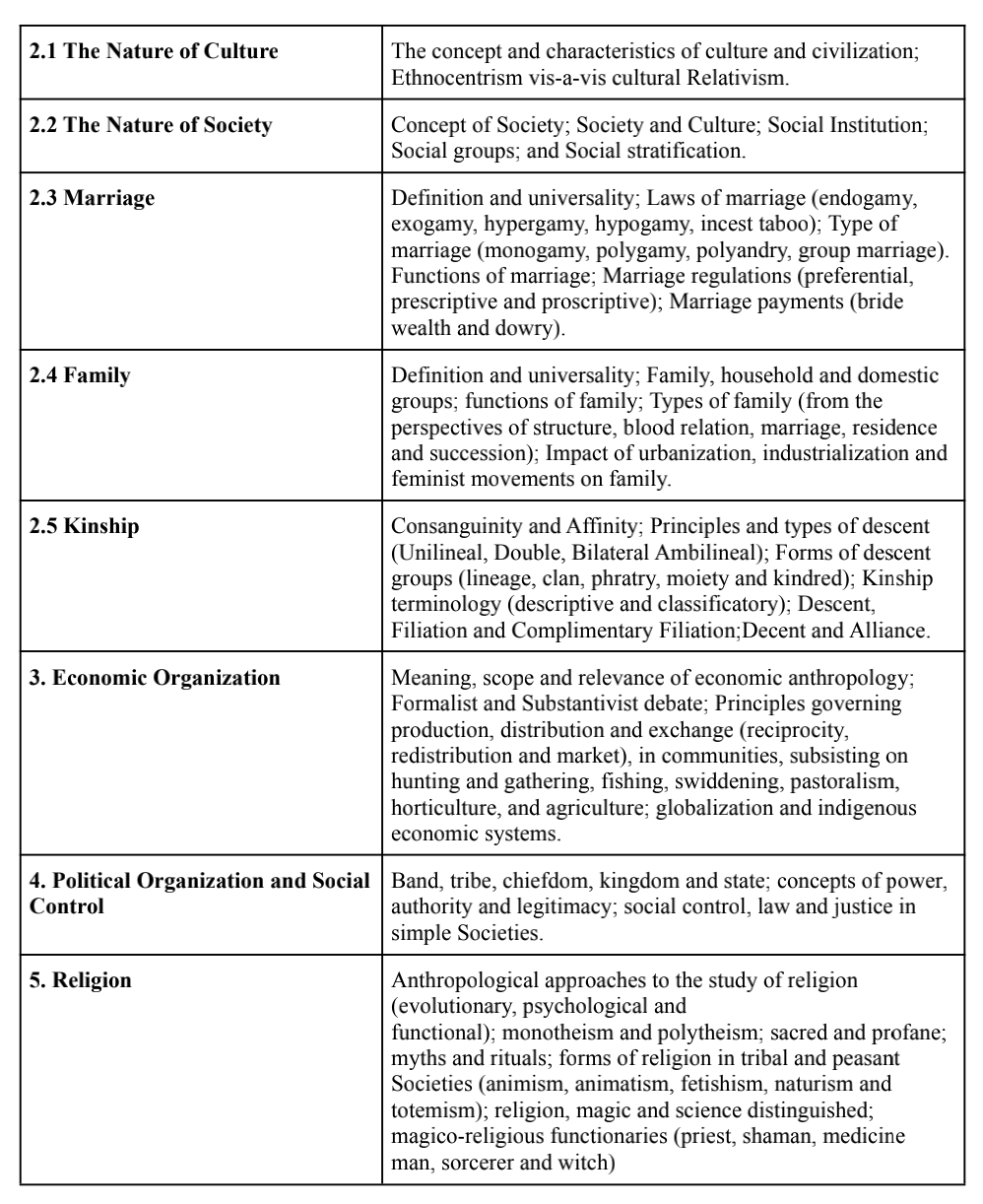
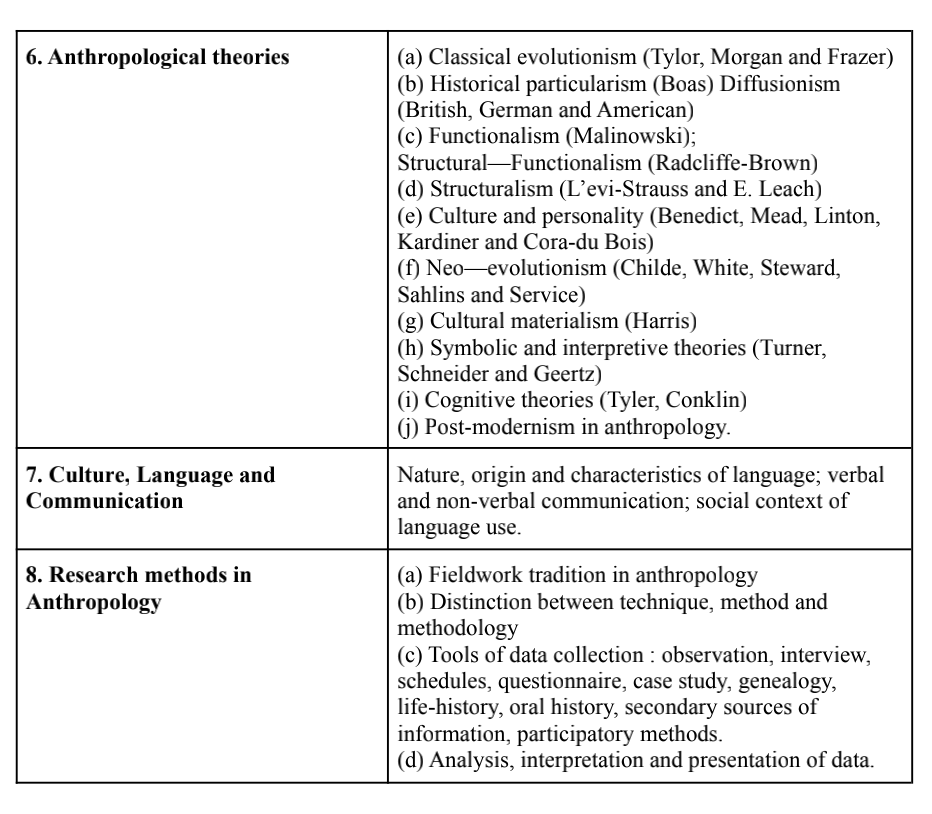
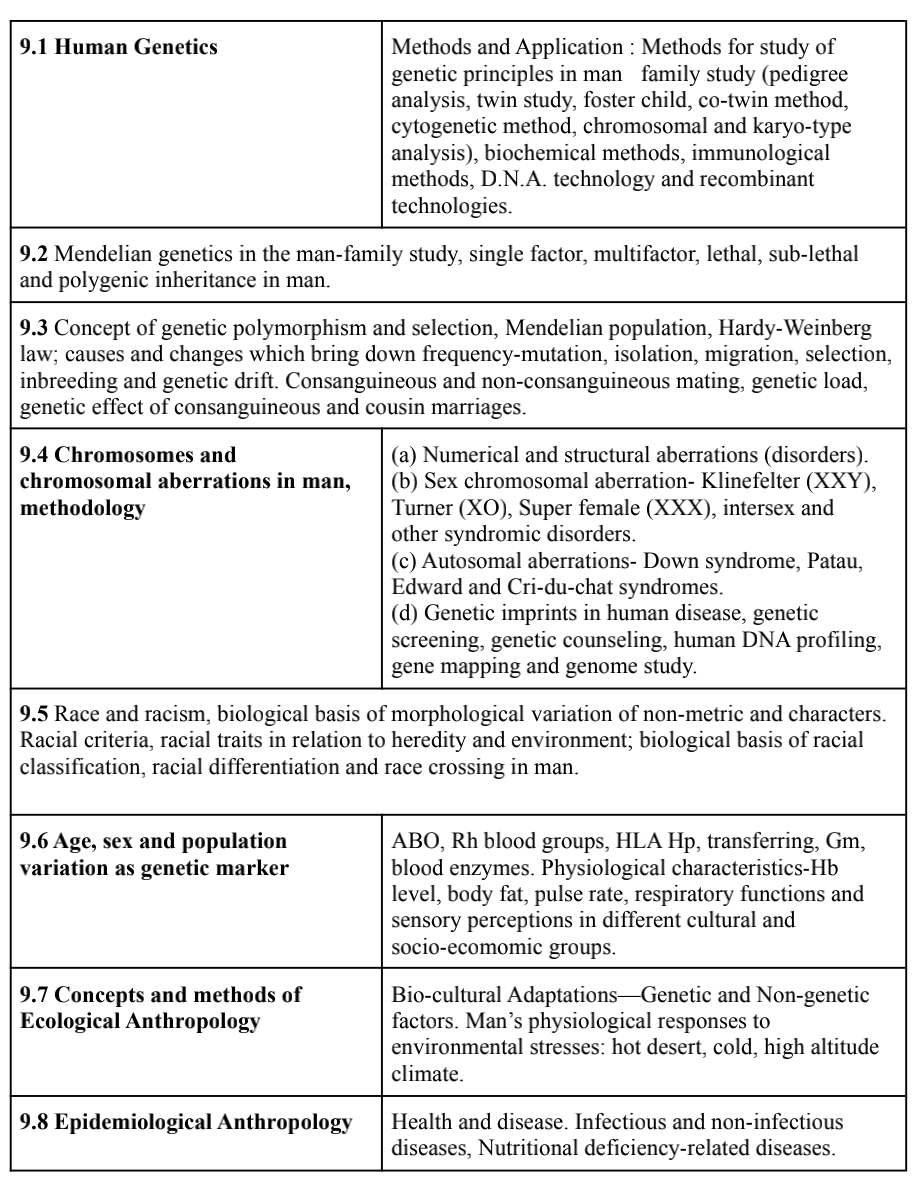
The UPSC Syllabus 2024 for the Anthropology Optional Subject (Paper 1) is structured into 12 core sections, covering a wide array of fascinating topics related to human evolution and culture.
- Meaning, Scope and development of Anthropology, Relationships with other disciplines, Main branches of Anthropology, their scope and relevance, Human Evolution and the emergence of Man, The biological basis of Life, Principles of Prehistoric Archaeology. Chronology, Cultural Evolution.
- Nature of Culture, Society, Marriage, Family, Kinship
- Economic Organization
- Political Organization and Social Control
- Religion
- Anthropological theories
- Culture, Language and Communication
- Research methods in Anthropology
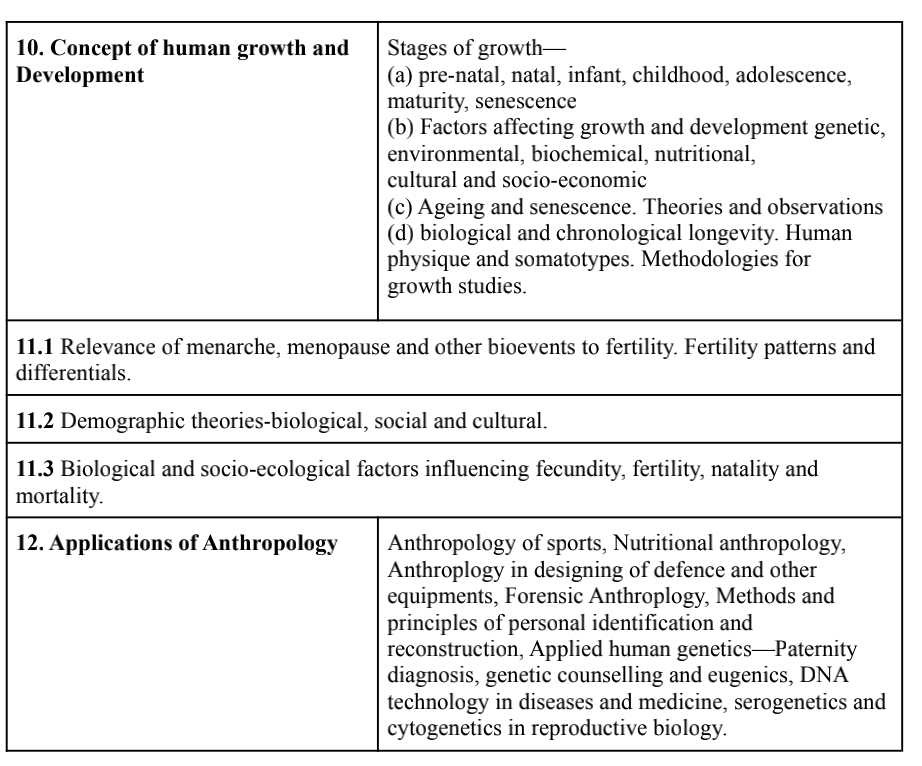
- Human Genetics
- Concept of human growth and Development
- Relevance of menarche, menopause and other bioevents to fertility. Fertility patterns and differentials.
- Applications of Anthropology
Anthropology Optional Syllabus for Paper 2
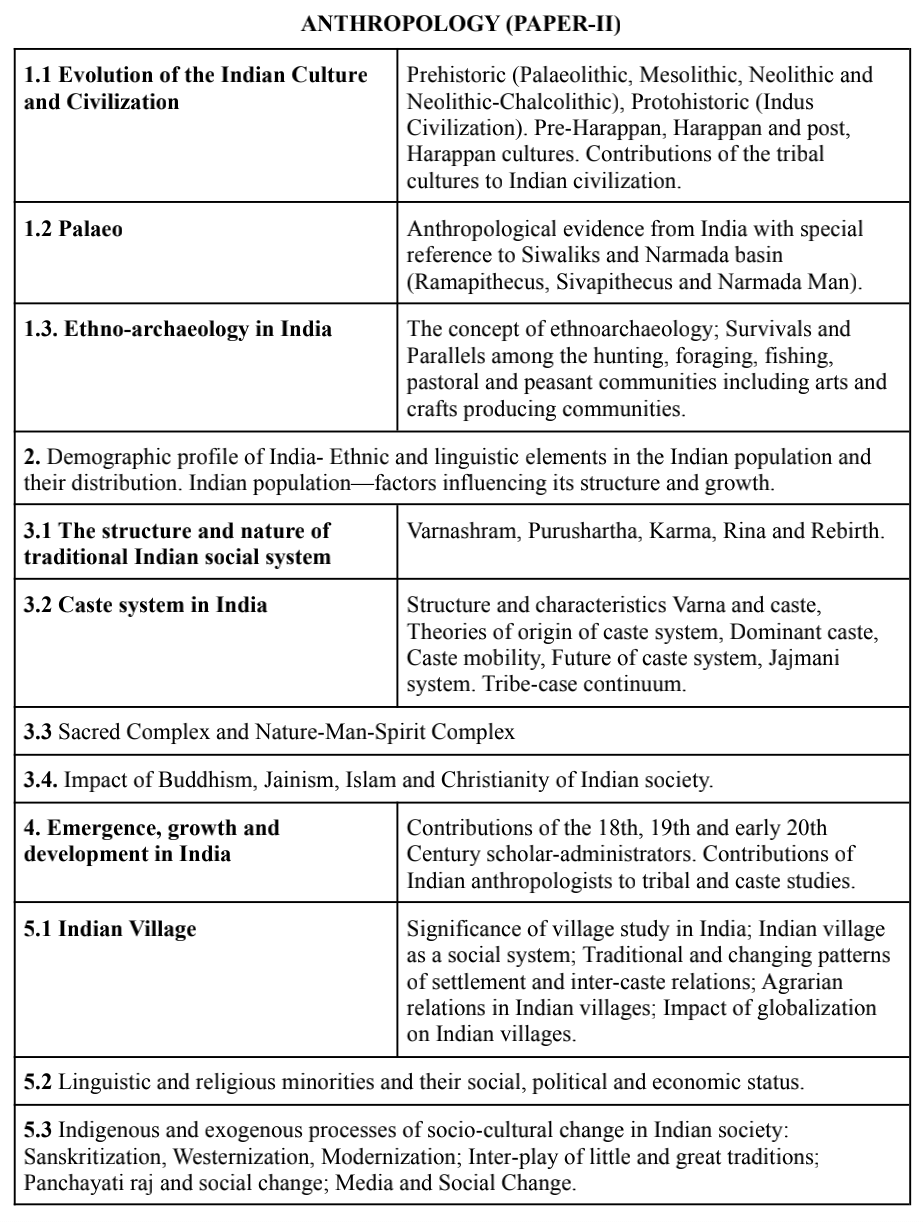
The UPSC Anthropology syllabus for Optional Paper 2 is systematically divided into 9 specialized units, which are outlined in the following section.
- Evolution of Indian Culture & Civilization, Palaeo, Ethno-archaeology in India
- Demographic Profile of India
- Structure & Nature of Traditional Indian Social System, Caste System in India, Sacred Complex and Nature-Man-Spirit Complex, Impact of Buddhism, Jainism, Islam and Christianity of Indian society.
- Emergence, growth and development in India
- Indian Village, Linguistic and religious minorities and their social, political and economic status, Indigenous and exogenous processes of socio-cultural change in Indian society.
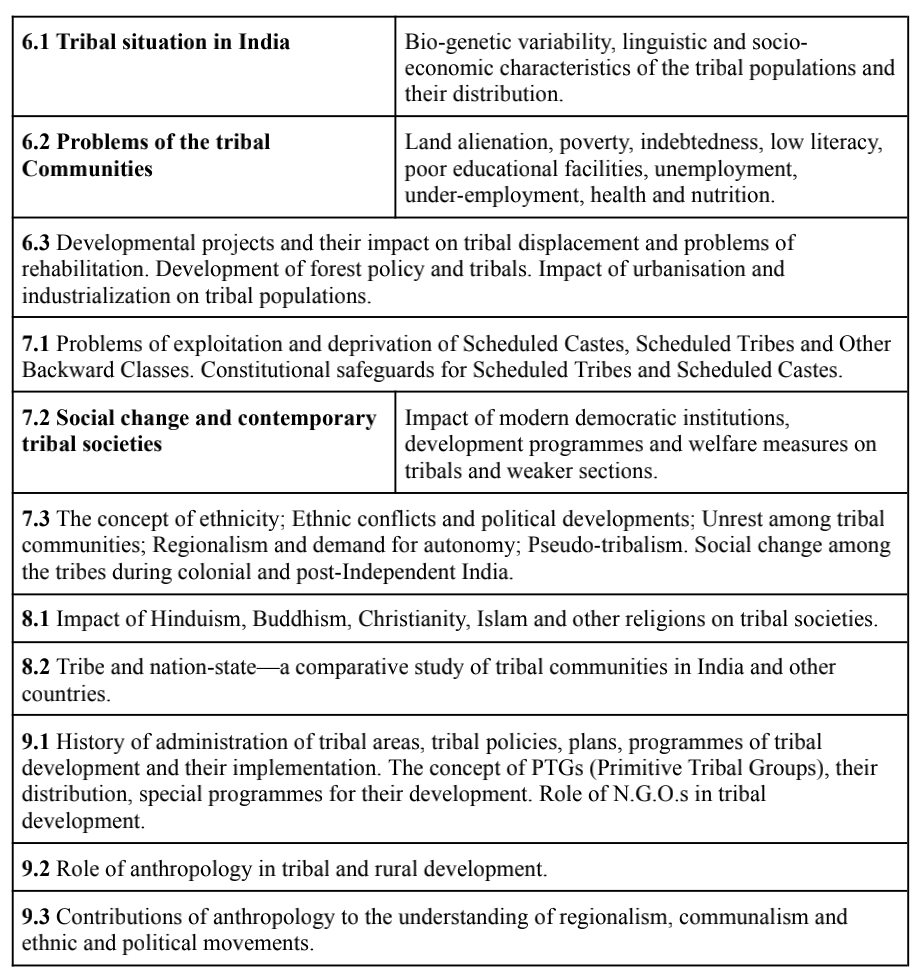
- The tribal situation in India, Problems of the tribal Communities
- Problems of exploitation and deprivation of SC, ST and OBC, Social change and contemporary tribal societies.
- Tribe and nation-state, Impact of Hinduism, Buddhism, Christianity, Islam and other religions on tribal societies.
- History of administration of tribal areas, Role of anthropology in tribal and rural development.
Review the comprehensive breakdown of the Anthropology syllabus for Paper 2 provided below to align your preparation strategy.
UPSC Syllabus for Mains & Optional Subject
UPSC Cut Off [Previous Year]- Click to Check
Check UPSC IAS, IPS, IRS & IFS Salary
UPSC Anthropology Syllabus 2025: FAQs
Ans. Yes, the Anthropology syllabus is significantly more concise compared to extensive optional subjects like Sociology or Geography, making it highly time-efficient for UPSC aspirants.
Ans. Absolutely. Anthropology is widely considered a high-scoring optional subject because the questions are typically direct and based on well-defined fundamental concepts.
Ans. While History focuses on analyzing the causes and effects of past events, Anthropology provides a holistic study of the human condition, integrating both cultural and biological perspectives.
Recommended Reads
- Assam DElEd Result 2026 Released Today at scertpet.co.in - Download Merit List PDF
- APCOB Staff Assistant Previous Year Question Papers: Download PDF
- RRB Group D PET Result 2026 Out, Physical Exam Merit List (CEN 08/2024)
- IIM CAT 2026 Notification Released: Apply Online for Common Admission Test, Exam Dates, & Eligibility
- PSSSB Jail Warder Question Paper & Answer Key 2026 (26 July): Download PDF
- CG SET Syllabus 2026 & Exam Pattern: Subject-Wise Topics PDF
Never miss another exam update!
Get the fastest exam results, recruitment news, and educational guides delivered directly to your phone.