As a dedicated aspirant for the UPSC IAS exam, developing a deep understanding of the Indian economy is essential for both your academic success and your future administrative career. While general economic concepts are vital for the Prelims, choosing Economics as an optional subject requires a rigorous and analytical approach to the material. Beyond foundational principles, candidates must stay updated with contemporary economic trends, government policies, and global shifts. In the guide below, we have outlined the comprehensive Economics optional syllabus to help you navigate your UPSC Mains preparation effectively.
UPSC Economics Syllabus 2025
The first step in conquering the UPSC CSE (Civil Service Examination) is to gain a thorough familiarity with the official UPSC syllabus. While NCERT textbooks provide a necessary foundation, the dynamic nature of the Economics optional requires a more advanced study of analytical models and policy frameworks. Below, we break down the syllabus for both Paper 1 and Paper 2.
UPSC Economics Paper 1 Syllabus
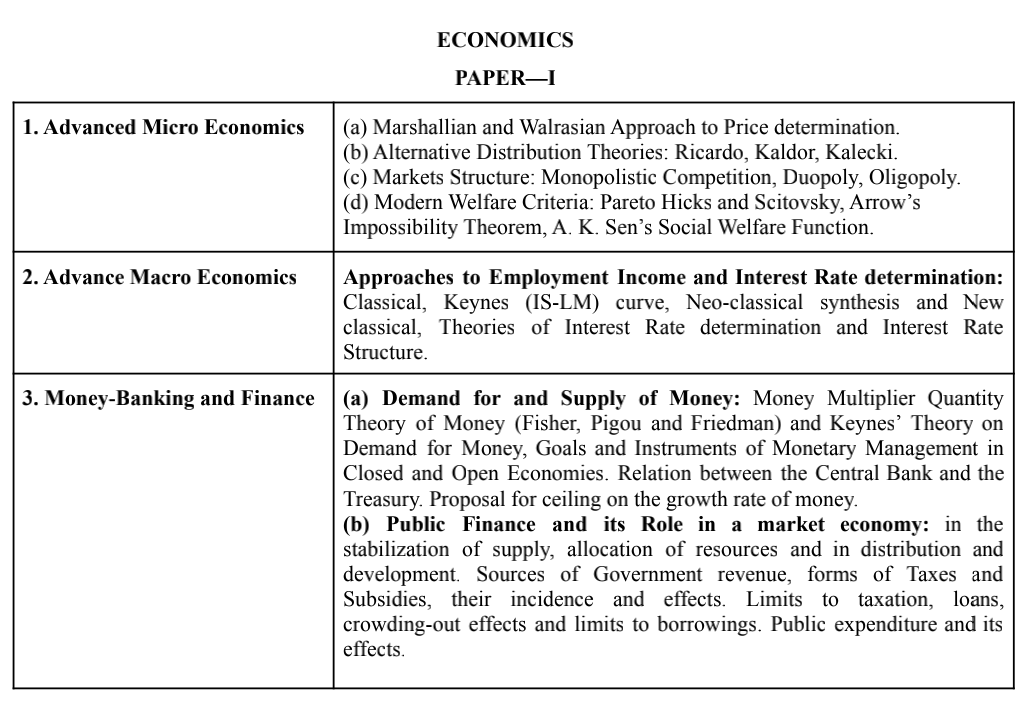
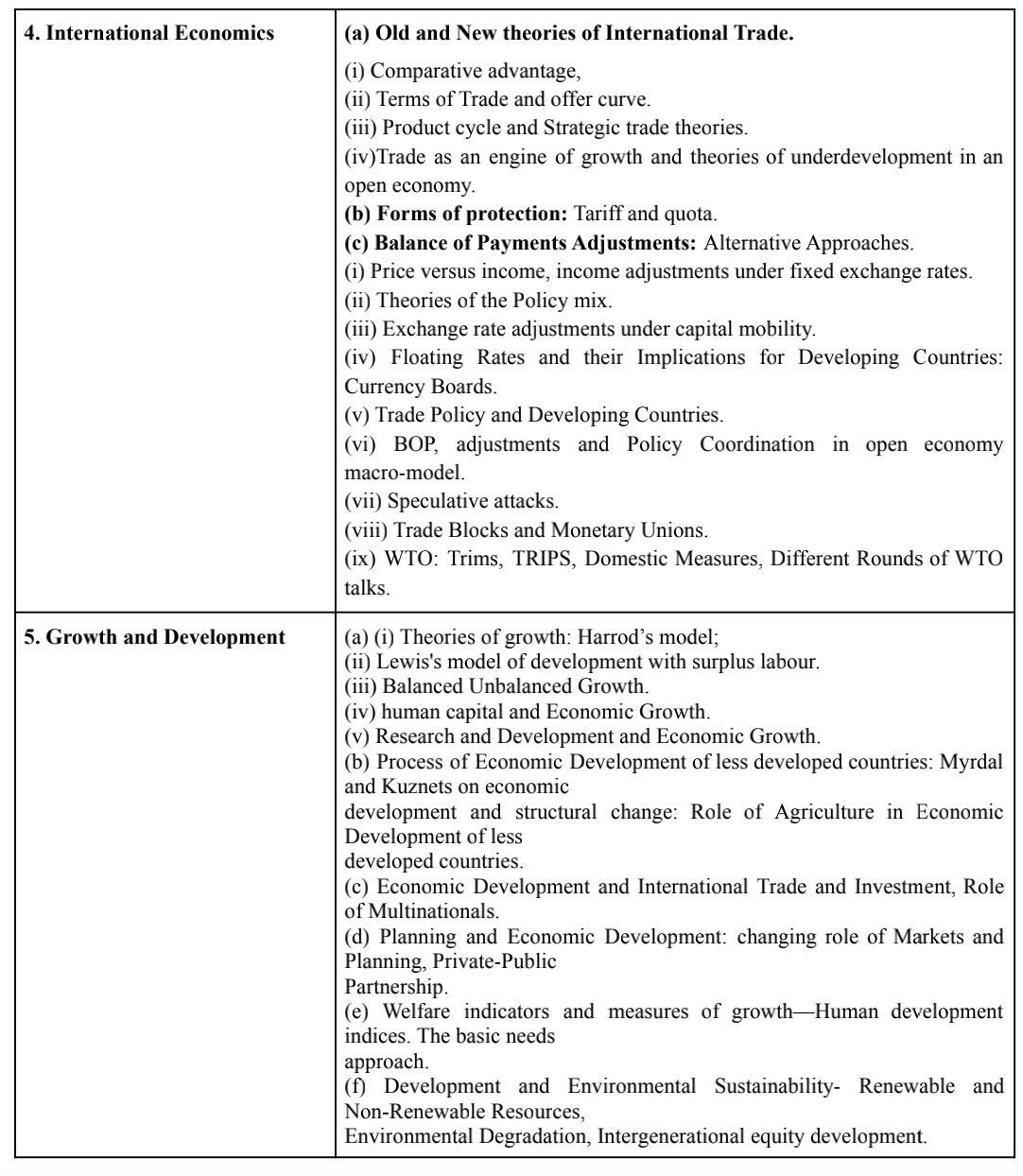
UPSC Economics Optional Paper 1 is worth 250 marks and is structured across 5 core units that test your analytical prowess in economic theory.
- Advanced Microeconomics
- Advanced Macro Economics
- Money-Banking and Finance
- International Economics, and
- Growth and Development.
The detailed syllabus for each unit, covering key theoretical concepts, is provided below for your reference.
UPSC Economics Optional Paper 2 Syllabus
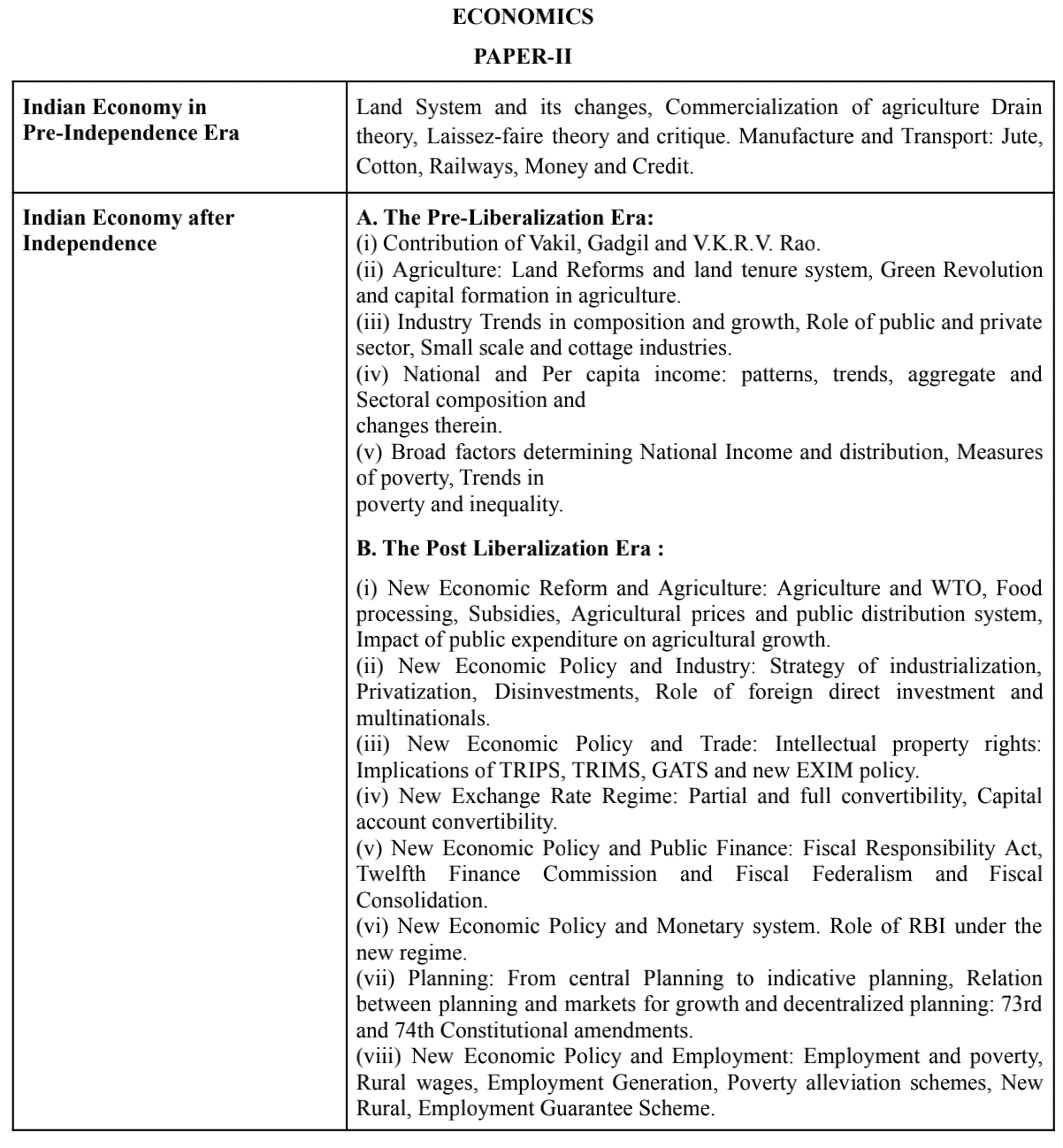
UPSC Economics Paper 2, carrying 250 marks, focuses on the Indian Economy, spanning the Pre-Independence era to the post-liberalization period. To score well, aspirants must combine core theoretical concepts with empirical data and recent economic updates relevant to the syllabus.
Marks Distribution for UPSC Economics Optional Subjects
Analyzing trends from previous years' UPSC Mains exams allows us to estimate the weightage of various sections. We recommend prioritizing high-scoring, high-frequency topics during your revision to maximize your overall performance in the Economics optional paper.
| UPSC Economics Syllabus- Marks Distribution (Expected) | |
| Topics | Probable Number of Questions |
| Indian Economy | 40 to 45 questions |
| Micro and Macro Economics | 35 to 40 questions |
| International Economics | 15 to 20 questions |
| Money, Banking & Public Finance | 10 to 15 questions |
| Growth and Development | 9 to 10 questions |
| Statistics | 7 to 10 questions |
UPSC Prelims Syllabus 2025- Click Here
UPSC Syllabus for Mains & Optional Subject
UPSC Cut Off [Previous Year]- Click to Check
Check UPSC IAS, IPS, IRS & IFS Salary
UPSC Economics Syllabus: FAQs
Ans. While Economics may not have the same volume of test-takers as subjects like Geography or Public Administration, it consistently demonstrates a strong success rate for candidates with a solid conceptual grasp.
Ans. No, the UPSC Economics syllabus for the optional subject is highly detailed and requires a deep dive into advanced economic theories and their practical applications.
Ans. The syllabus goes well beyond basic definitions; candidates are expected to demonstrate an analytical understanding of complex economic concepts and their relevance to the Indian context.
Ans. Economics is an ideal optional subject for candidates with an academic background in the field or those with a keen analytical interest in tracking India's economic growth and policy landscape.
Recommended Reads
- UPSC Principal & Vice Principal Syllabus 2026: Revised Exam Pattern & PDF
- UPSC Principal & Vice-Principal Recruitment 2026: Notification Out for 828 Posts
- UPSC CAPF AC Answer Key 2026 Released at upsc.gov.in, Download Response Sheet PDF
- UPSC CAPF AC Question Paper 2026 (19 July): Download Paper 1 & 2 PDF & Exam Analysis
- UPSC CAPF AC Admit Card 2026 Released: Direct Link to Download Hall Ticket @upsconline.gov.in
- UPSC Drug Inspector Recruitment 2026: Apply Online Ends Today for 186 Vacancies
Never miss another exam update!
Get the fastest exam results, recruitment news, and educational guides delivered directly to your phone.