The UK higher education sector is undergoing a strategic transformation, shifting its focus from traditional student mobility to a broader model of transnational education. By bringing world-class British degrees directly to students worldwide, universities are increasingly prioritizing the export of programs through strategic partnerships and international branch campuses.
But what does this shift mean for your future? Are international branch campuses as valuable as studying in the UK, and how are academic institutions evolving to ensure their curricula align with the demands of global employers and dynamic local economies?
To explore these questions from a student-centric perspective, Online Result spoke with Paul Julian Bennett, Chief Marketing Officer at British University Vietnam (BUV). Situated in one of Southeast Asia’s most vibrant education markets, Bennett provides an expert view on why British universities are expanding internationally, how BUV manages its UK university partnerships, and why career-readiness is the cornerstone of modern global education strategies.

Online Result: What exactly is a higher education strategy, and why is it vital for students to understand?
Paul Bennett (BUV): Students should focus on the skills and qualifications necessary to thrive in the labor market a decade from now. I understand that for an 18-year-old, planning ten years ahead can feel daunting—my own daughter, who is entering university soon, often says, “Dad, I can’t even imagine next year, let alone where I’ll be at 28.”
However, recognizing the value of a high-quality, accessible degree positions students for long-term success in three crucial ways.
“Understanding the value of getting the highest-quality qualification possible, while also making it accessible, puts students in a much stronger position”
First, it expands their future career options. Second, it provides the versatility to transition across different industries rather than being limited to one narrow professional path. Third, both students and parents must evaluate the return on investment (ROI) carefully when selecting an international qualification.
Online Result: Could you explain the concept of ROI in this context?
Paul Bennett (BUV): ROI, or Return on Investment, is a significant concern for families, particularly in Southeast Asia. When families invest substantial capital into education, they need assurance that this investment will yield meaningful career opportunities and lasting value.
I believe students also have a duty to consider the value of their education. It requires significant time, effort, and often financial sacrifice from their families, so it is essential to ensure that the qualification chosen provides the best possible trajectory.
Online Result: So, it really boils down to future earning potential and the time it takes to recoup the cost of tuition.
Honestly, my daughter isn’t focused on "repaying" me. As a parent, my priority is providing her with the best possible qualification to ensure her future security. That is the driving force for many parents across Southeast Asia: the desire to empower the next generation with opportunities that exceed their own.
That legacy isn't about financial repayment. I hope students recognize that their parents’ investment is rooted in the desire for them to lead successful, fulfilling lives—it is a generational "pay it forward" model.
This is where high-quality higher education becomes critical. From a Southeast Asian perspective, holding a top-tier qualification from the UK or US provides a distinct competitive edge, not just when job hunting, but also when competing for career advancements years down the line.

Exporting education vs importing students. The British model
Online Result: Strategies require long-term foresight. The UK has updated its education strategy—what are the most significant changes?
Paul Bennett (BUV): Much of this shift is driven by geopolitical changes. The global climate toward open migration has cooled compared to two decades ago—this is evident in the UK, as well as in Australia and the United States.
The UK government has implemented policies to reduce international student visas and has tightened the regulations governing post-study work routes.
Having previously worked in Australia, I saw similar trends. Historically, international students could complete degrees and pursue pathways to residency, offering opportunities to build lives abroad. Those windows of opportunity are now narrowing globally.
Consequently, the UK government is encouraging universities to "export" their models rather than relying solely on inbound student migration—effectively bringing the British academic experience directly to the students’ home regions.
“The UK government has encouraged universities to export their education model instead of importing students. In other words, bring the same quality education and qualifications closer to students in their home regions.”
From an economic standpoint, this is a sensible move toward increased accessibility. For many students across the developing world, the cost of studying in the UK or Australia—compounded by high tuition, unfavorable exchange rates, and living expenses—has become prohibitive.
The British government’s initiative to encourage this overseas expansion is a strategic and well-considered pivot.
The model at our university is quite unique. While the government encourages specific institutions like the University of Southampton to establish local campuses, the process is often slow due to regulatory hurdles, and it limits students to the qualifications of one single institution.
At BUV, our approach is different. We act as a hub for seven university partners, including prestigious institutions like the University of London and the London School of Economics and Political Science. We also partner with the University of Stirling, Arts University Bournemouth, Bournemouth University, Manchester Metropolitan University, and Staffordshire University to deliver their curricula directly in Vietnam.
This grants students in Vietnam greater choice, ranging from institutional rankings to price points and program specializations.
Online Result: So, you integrate various programs and curricula from different universities into the BUV ecosystem?
Paul Bennett (BUV): Exactly. Take our business school, for instance. Given that Vietnam is one of the world's fastest-growing economies, the demand for business-related disciplines is exceptionally high.
Students on our campus can choose between business management, marketing communications, or professional communication degrees from various partners. A student might, for instance, choose a degree from Staffordshire University, Manchester Metropolitan, or the University of London, all while benefiting from the same campus infrastructure.
This provides students with unmatched flexibility, a wider range of tuition options, and access to prestigious international qualifications without the need to relocate.
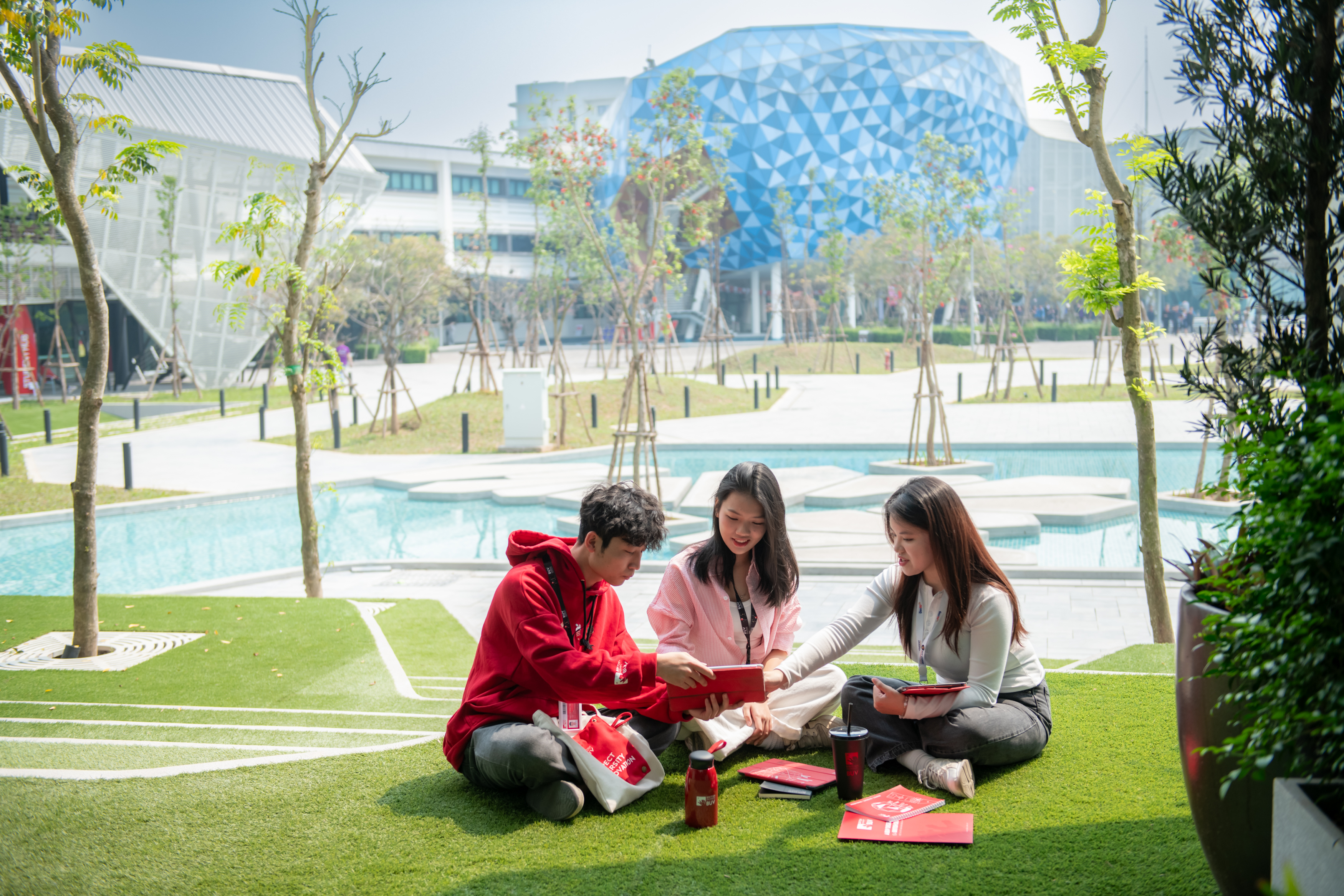
Giving students more choice, closer to home
Online Result: You’ve invested in a major new campus in Vietnam. What makes the Vietnamese market so attractive compared to neighbors like Singapore or Malaysia?
Paul Bennett (BUV): There are several compelling reasons. Vietnam boasts one of Southeast Asia's most resilient and fastest-growing economies, maintaining strong GDP growth for nearly a decade. Its current growth trajectory is remarkably aggressive, surpassing the historical year-on-year growth rates of both China and India.
This performance has triggered massive international investment. With a population of 112 million—nearly double that of the UK—and roughly 50% under the age of 35, Vietnam is a young, dynamic, and rapidly expanding consumer market that global brands cannot ignore.
Furthermore, Vietnam is strategically positioned in the heart of Asia. Its proximity to China, India, and major regional hubs like Singapore makes it an ideal central base for companies looking to expand their regional footprint.
The government’s commitment to education is another pivotal factor. We are actively fostering international collaboration, recently joining a Vietnamese delegation to China to sign MoUs with several universities.
Our university is backed by the Taylor’s Education Group, a major provider with over 35 years of experience in the region. Three years ago, we committed approximately $165 million to complete our current state-of-the-art campus.
I truly believe this facility is world-class. It stands up to the standards of leading institutions in the US or China. Despite our current student population of 4,000, our facilities compete with much larger universities that possess substantial government funding.

Our business model is built around empowering students with choice while allowing them to remain grounded in their local cultural and family environment.
This is crucial because when students study entirely abroad, the case studies and business examples they encounter are often based on Western markets. They gain a high-quality qualification but may lack the localized context required for specific regional roles.
A local employer might review a returning graduate’s degree and note, “Excellent credentials, but you lack an understanding of the nuances of the Vietnamese market.”
Our model bridges that gap: students receive an identical academic qualification and structure but within a relevant local context. It is the perfect marriage of a global curriculum and a Southeast Asian learning experience.
Online Result: You must work closely with businesses and government bodies to sustain this model. How do you integrate practical, industry-led experience into the student journey?
As the university expands, we are heavily investing in our corporate and industry engagement team. We currently partner with approximately 500 companies, including global titans such as Bosch, Panasonic, and HSBC, as well as influential local conglomerates like Vingroup.
Vingroup is a fascinating example—an essential, multifaceted conglomerate that spans automotive manufacturing, residential development, hospitality, and more. They represent the depth of the local market we tap into.
My goal over the next three years is to deepen these 500 existing relationships, moving beyond mere collaboration into true institutional partnerships.
Our Vice Chancellor shares this vision: that students should be able to step off the graduation stage and directly into their professional roles within these partner organizations.
We currently run sophisticated internship-matching programs. For hospitality students, for instance, we partner with groups like InterContinental Hotels to ensure the internship is a developmental experience—never just free labor—where students engage in meaningful tasks.
Our students shadow managers across multiple operational areas, gaining a comprehensive understanding of the business, which they then integrate into their academic coursework.
“We work closely with partners to ensure students don’t end up washing dishes or being treated as free labour during a summer placement. Instead, our students shadow three or four different managers across several operational areas of the business. Then they bring that experience back into the classroom.”
This is central to our value proposition. We want every student to exit university not only with a degree but with the real-world experience and direct pathways to employment that ensure a successful career start.
Online Result: Your strategy focuses on syncing academics with labor market needs. How is this implemented?
Paul Bennett (BUV): Absolutely. A key project we are currently spearheading alongside Vietnam’s Ministry of Education and Training is a national employability study.
We are engaging with 400 high-growth companies to map out the exact academic, practical, and soft skills they require from the future workforce.
For example, every student joining in 2026-27 will participate in a tuition-funded international experience. We are planning trips to China—a global leader in AI—to ensure our students see firsthand how AI is being utilized in real-world business scenarios.
Our objective is twofold: importing high-caliber UK programs that align with Asia’s growth sectors and tailoring the learning experience to meet the specific requirements of regional employers.
Take the upcoming Hanoi metro network. A city of 10 million people needs a sophisticated transit system; the government has pledged to develop this over the next 25 years.
We are already in discussions with the companies driving that infrastructure project to determine the talent they will need in five years. We are now aligning our programs in logistics, business management, AI, and technology to ensure our students have the exact skill sets for these future roles.
CGPA to Percentage Calculator
Convert your college 10-point CGPA or SGPA to equivalent percentage using official university multiplication formulas.
Never miss another updates!
Get the fastest exam results, recruitment news, and educational guides delivered directly to your phone.