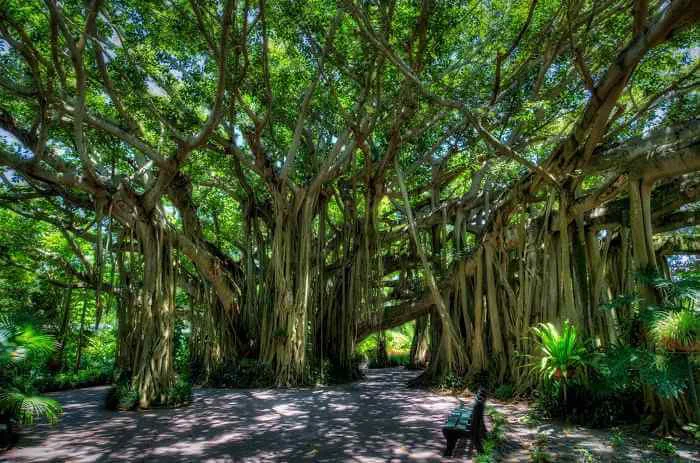
The Indian Banyan, scientifically known as *Ficus benghalensis* (or *Ficus bengalensis*), stands proudly as the designated National Tree of India. Beyond its striking physical presence characterized by sprawling canopies and complex root systems, this remarkable botanical specimen holds a deeply revered place in culture, mythology, and ecosystems worldwide.
Botanical Classification and Taxonomy
Understanding the scientific lineage of the Indian Banyan helps botanists and nature enthusiasts appreciate its unique growth habits. Mature specimens utilize aerial prop roots that descend from branches to form thick, woody trunks, allowing the tree to expand laterally over massive areas. The largest living specimen currently resides in Kolkata, India, while another famous landmark tree planted in 1873 in Lahaina’s Courthouse Square, Hawaii, spans over two-thirds of an acre.
Taxonomic Overview of the Indian Banyan
- Kingdom: Plantae
- Division: Magnoliophyta
- Class: Magnoliopsida
- Order: Urticales
- Family: Moraceae
- Genus: Ficus
- Species: Ficus benghalensis
| Kingdom | Plantae |
| Division | Magnoliophyta |
| Class | Magnoliopsida |
| Order | Urticales |
| Family | Moraceae |
| Genus | Ficus |
| Species | Ficus benghalensis |
Cultural and Mythological Significance
In Hindu philosophy and sacred texts like the Bhagavad Gita, the Banyan tree is revered as 'Ashwath Vriksha', representing the manifestation of the divine among trees and symbolizing immortality and eternal life. Furthermore, it is frequently identified as the 'Kalpa Vriksha', or the 'Tree of Wish Fulfillment'. Traditionally, village councils often gather under the vast, protective canopy of Banyan trees to discuss community matters.
Global Presence and Pop Culture
The influence of *Ficus benghalensis* extends far beyond Indian borders. It is prominently featured on the Indonesian coat of arms as a powerful symbol of national unity. In literature, author Brian Aldiss featured a colossal Banyan tree in his notable science fiction novel *Hothouse*. Additionally, ancient Banyan trees display their incredible endurance by growing over and through the historic stone architecture of the Ta Prohm temple within the famous Angkor Wat complex.
Frequently Asked Questions (FAQs)
Recommended Reads
- Headquarters of National and International Organizations: Complete Preparation Guide
- India's Linguistic Landscape: Official Languages & Scheduled Languages
- 17 Official National Symbols of India: A Complete Guide to National Pride
- India's Protected Wilderness: A Complete Guide to National Parks and Wildlife Sanctuaries
- National Animal of India: The Royal Bengal Tiger Facts & History
- Is Field Hockey India's National Game? Fact vs. Fiction Explained
Exam Photo & Signature Resizer (20KB - 50KB)
Resize passport photo & signature to 20-50KB with Name & Date of Photo (DOP) strip or combine them in 1-click.
Never miss another exam update!
Get the fastest exam results, recruitment news, and educational guides delivered directly to your phone.