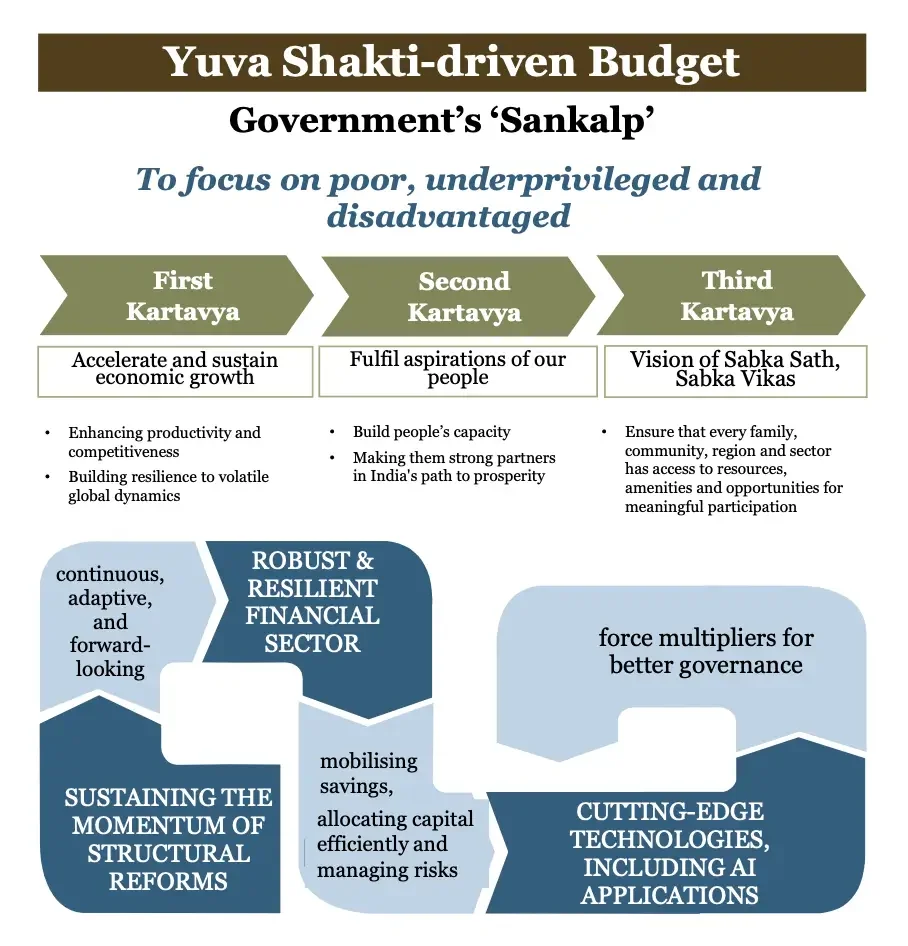
The Union Budget 2026–27, a crucial financial blueprint for India's economic trajectory, was presented to the Parliament of India in February 2026 by the esteemed Union Finance Minister. This comprehensive financial statement outlines the government's fiscal strategy and developmental priorities for the fiscal year spanning from 1 April 2026 to 31 March 2027. Central to its approach are the three core 'Kartavya' or duties: accelerating and sustaining economic growth, fulfilling the aspirations of the people, and building long-term national resilience. This budget aims for a robust growth trajectory of approximately 7%, emphasizing inclusive development and fiscal prudence across key sectors.
The overarching objective of the Union Budget 2026–27 is to foster inclusive growth hand-in-hand with stringent fiscal discipline. This is meticulously reflected in its structure, which is broadly divided into the Revenue Budget and the Capital Budget, each detailing the government's income and expenditure. The 'Key to the Budget Documents 2026–27' published by the government serves as an invaluable guide for understanding these intricate details. You can Download & Review: Union Budget 2026-27 Key Details, which provides an in-depth look at the document.
Core Objectives and Economic Pillars
The budgetary framework is anchored on the government's commitment to three fundamental duties, or 'Kartavya': accelerating and sustaining economic growth, fulfilling the aspirations of the people, and building long-term national resilience. This forms the bedrock of its economic strategy, which aims to strengthen people's capacity, enhance productivity and competitiveness, and build resilience against volatile global economic conditions.
Key economic pillars underpinning this budget include maintaining moderate inflation to safeguard purchasing power, adhering to fiscal discipline for sustainable public finances, and fostering strong domestic demand, significantly driven by public capital expenditure. These interconnected elements are designed to create a stable and dynamic economic environment.
Focus on Key Sectors and Reform Areas
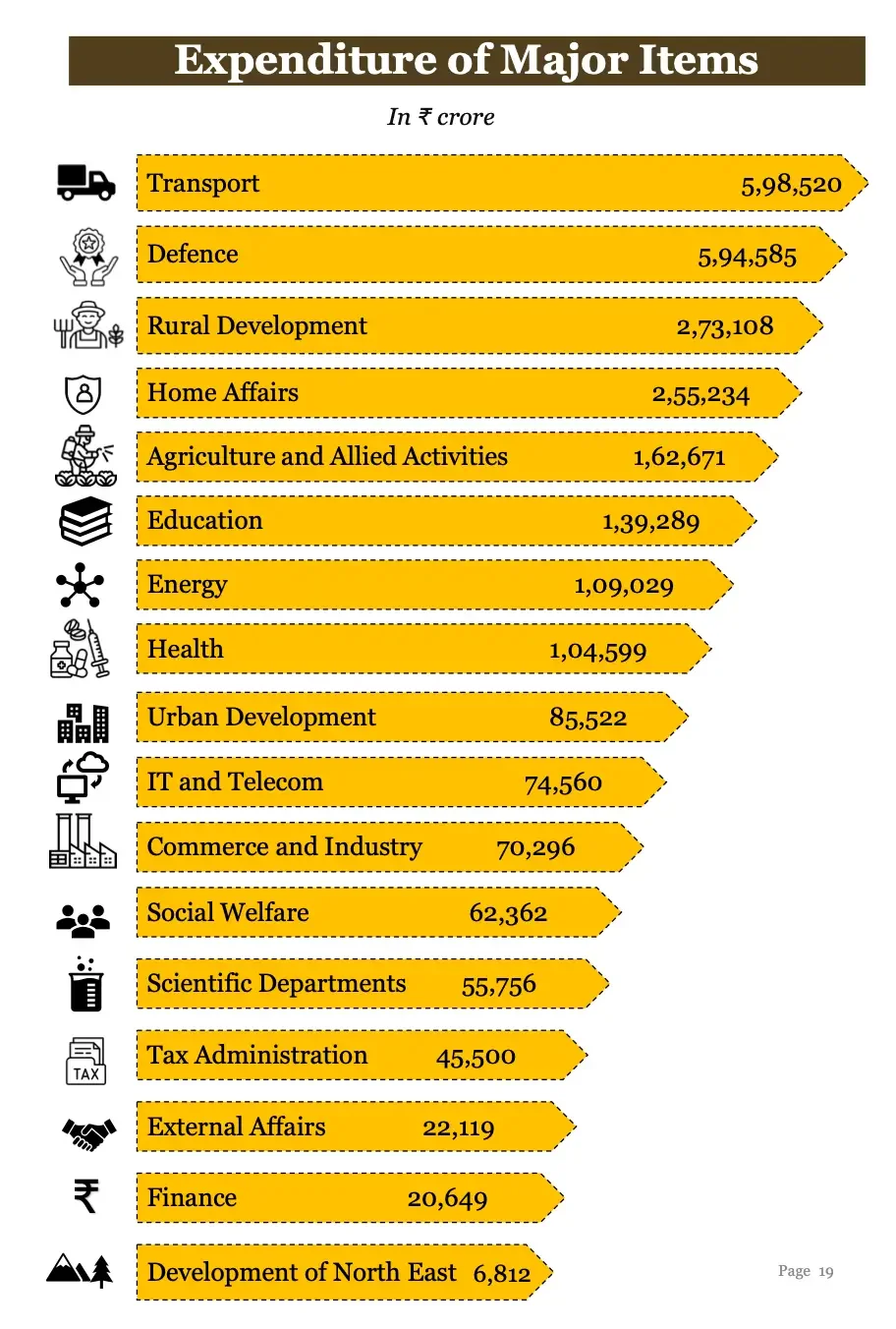
The Union Budget 2026–27 dedicates significant attention to several major sectors vital for national development. These include Agriculture, Education, Health, Infrastructure, Defence, and the Micro, Small, and Medium Enterprises (MSME) sector. Initiatives within Agriculture aim to bolster farmer income, enhance irrigation facilities, and develop agri-infrastructure. In the realm of Infrastructure, there's an increased allocation for roads, railways, and digital infrastructure, signaling a push for enhanced connectivity and modernization.
Major reform areas identified for focused attention include the expansion of domestic manufacturing ecosystems, support for industrial competitiveness, and the strengthening of supply chains. These reforms are crucial for building a self-reliant and globally competitive economy.
Empowering 'Yuva Shakti' for a Future-Ready Nation
A significant focus of the Union Budget 2026–27 is placed on empowering the youth, recognizing their pivotal role in India's future. The 'Yuva Shakti' initiatives are designed with clear objectives: enhancing employability through comprehensive skill development programs, encouraging innovation and entrepreneurship among young minds, and building future-ready human capital equipped to meet the challenges and opportunities of tomorrow.
These efforts are expected to create a vibrant ecosystem for young Indians to thrive, contribute to economic growth, and drive innovation across various sectors.
Union Budget 2026-27: Key Parameters at a Glance
The Union Budget 2026–27 is a multi-faceted document that details the government's financial plans and strategic direction. The following table provides a concise overview of its key parameters:
| Parameters | Details |
|---|---|
| Budget Name | Union Budget 2026–27 |
| Presented By | Union Finance Minister |
| Presented In | Parliament of India |
| Budget Type | Annual Financial Statement |
| Key Objective | Inclusive growth with fiscal discipline |
| Financial Year | 1 April 2026 – 31 March 2027 |
| Focus Theme | Economic growth, infrastructure, employment, social welfare |
| Major Sectors Covered | Agriculture, Education, Health, Infrastructure, Defence, MSME |
| Tax Structure | Income Tax, Corporate Tax, Indirect Taxes (GST-related measures) |
| Capital Expenditure | Increased allocation for roads, railways, digital infrastructure |
| Revenue Expenditure | Subsidies, salaries, pensions, welfare schemes |
| Fiscal Deficit Target | As per FRBM roadmap (expected reduction focus) |
| Agriculture Push | Farmer income support, irrigation, agri-infrastructure |
| Employment Measures | Skill development, startup incentives, MSME support |
| Social Welfare | Health insurance, women & youth schemes |
| Green Economy | Renewable energy, EVs, climate action |
| Digital Initiatives | AI, fintech, Digital India expansion |
| Defence Allocation | Strengthening border security & indigenous production |
Understanding the Budget: Key Documents
To facilitate a comprehensive understanding of the Union Budget 2026–27, the government has made several key documents available. These include the Annual Financial Statement (AFS), Demands for Grants (DG), and the Finance Bill. Additionally, Fiscal Policy Statements under the FRBM Act, Expenditure Budget, Receipt Budget, and Expenditure Profile offer detailed insights into financial planning. For a quick overview, 'Budget at a Glance' and 'Key Features of Budget 2026–27' are invaluable resources. The Memorandum Explaining the Finance Bill clarifies tax proposals, while the Output Outcome Monitoring Framework details performance metrics.
List of Union Budget 2026–27 Documents
- Annual Financial Statement (AFS)
- Demands for Grants (DG)
- Finance Bill
- Fiscal Policy Statements under the FRBM Act
- Expenditure Budget
- Receipt Budget
- Expenditure Profile
- Budget at a Glance
- Memorandum Explaining the Finance Bill
- Output Outcome Monitoring Framework
- Key Features of Budget 2026–27
- Implementation of Budget Announcements 2025–26
Citizens can access further details and official commentaries through various government publications and resources.
Frequently Asked Questions (FAQs)
Recommended Reads
- Union Bank of India SO Admit Card 2026 Out – Download Call Letter
- Union Bank of India Apprentice Result 2026 Out - Check Written Exam Results & Direct PDF Link
- Union Bank LBO Exam 2026: Syllabus, Pattern, Selection Process
- Union Bank of India SO Recruitment 2026: Apply for 395 Vacancies, Exam Date
- Union Bank SO Syllabus & Exam Pattern 2026: Complete Guide
- Union Bank of India Apprentice Result 2025: Date, Merit List & Guide
CGPA to Percentage Calculator
Convert your college 10-point CGPA or SGPA to equivalent percentage using official university multiplication formulas.
Never miss another exam update!
Get the fastest exam results, recruitment news, and educational guides delivered directly to your phone.