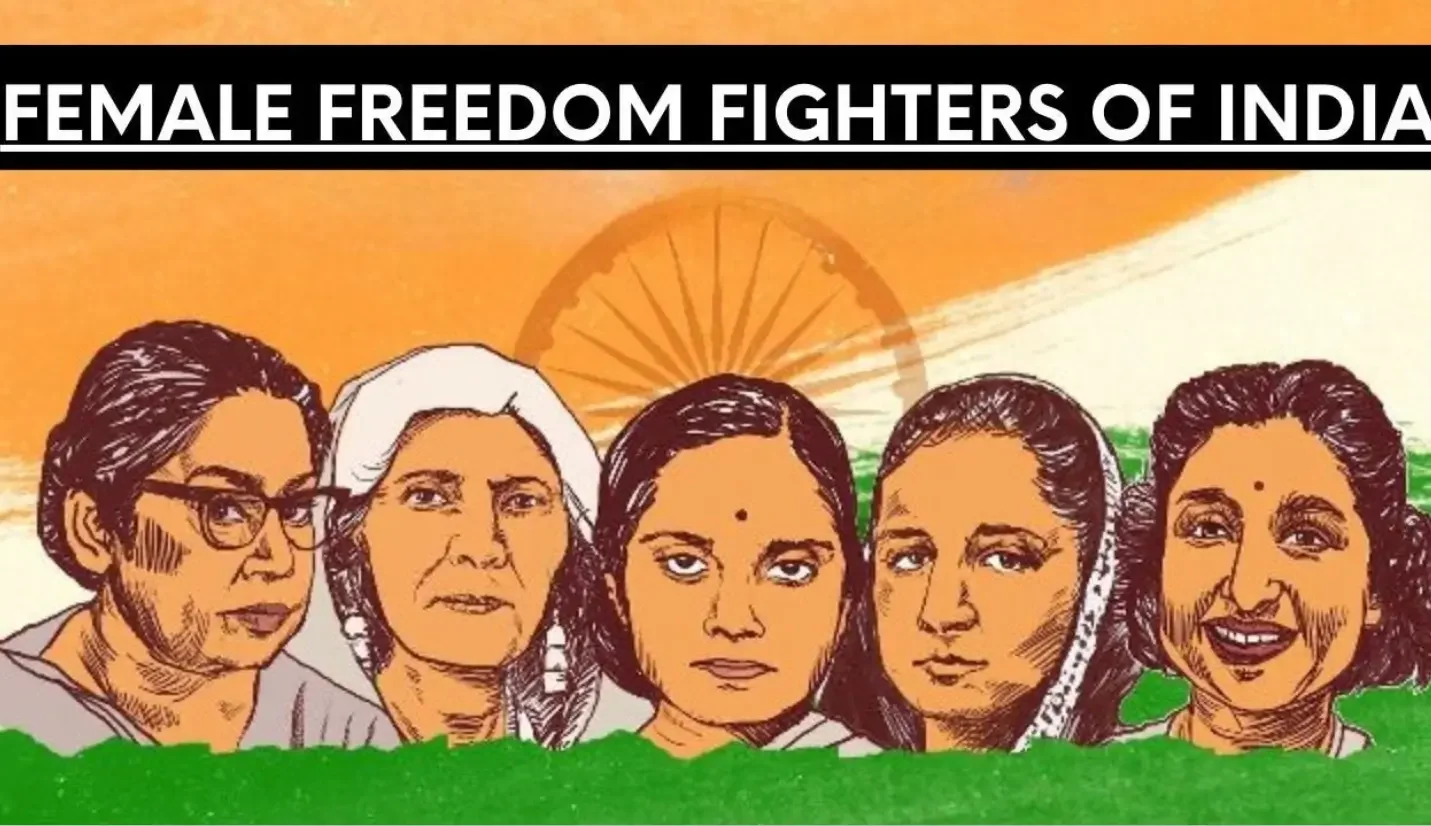
The Indian independence movement was forged by the collective courage, resilience, and unwavering sacrifice of millions. Among these heroes, the immense contributions of prominent women freedom fighters remain foundational to the nation's history. From early 19th-century guerrilla warfare to the diplomatic arenas of the United Nations, Indian women challenged British imperialism at every single turn. This overview explores their historical roles, contributions, and enduring legacies during the struggle for freedom.
Early Resistance and Mid-19th Century Uprisings
Women's active resistance against British imperialism began as early as 1817 when Bhima Bai Holkar employed guerrilla warfare against British Colonel Malcolm. Shortly after, figures like Rani Channamma of Kittur (born in 1778, who fought a defensive war against the British in 1824 and was imprisoned in Bailhongal fort where she passed away in 1829) and Begum Hazrat Mahal of Awadh challenged the British East India Company even before the landmark 1857 Revolt.
During the 1857 Revolt itself, Rani Lakshmi Bai of Jhansi famously defied the British 'Doctrine of Lapse' and fought valiantly. Concurrently, Begum Hazrat Mahal took active charge of the rebellion against the British annexation of Awadh before ultimately seeking refuge in Kathmandu.
Social Reform and Grassroots Leadership
The struggle was not merely political; it deeply intertwined with social reforms. Savitribai Phule, alongside Jyotirao Phule, established the first modern school for girls in Pune and is celebrated universally as the 'First Female Teacher of India.'
As mass movements gathered momentum under figures like Mahatma Gandhi, women stepped to the forefront of civil disobedience:
- Kasturba Gandhi faced early imprisonment in the Transvaal, actively participated in the 1942 Quit India Movement, and passed away while incarcerated in Poona.
- Kamla Nehru fearlessly led the Civil Disobedience Movement and the critical 'No Tax' campaign in the United Provinces.
- Vijay Laxmi Pandit participated actively in the Non-Cooperation and Civil Disobedience movements, served as a minister in the United Provinces, and later became the first female President of the United Nations General Assembly.
Global Diplomacy, Revolutionary Acts, and Governance
Indian women also extended the struggle internationally and managed clandestine operations. Madam Bhikaji Cama unfurled the Indian National Flag at the Stuttgart Socialist Conference in 1907 and ran the influential journal 'Bande Mataram' via the Free India Society. Annie Besant moved to India in 1893, co-founded the Home Rule League with Bal Gangadhar Tilak in 1916, and became the first woman President of the INC in 1917.
Sarojini Naidu, widely known as the 'Nightingale of India,' made history as the first Indian woman President of the Indian National Congress in 1925 and later served as the first woman Governor of an Indian state (Uttar Pradesh). Similarly, Sucheta Kriplani co-founded the Quit India Movement association alongside Jayaprakash Narayan, melodiously sang 'Vande Mataram' in the Constituent Assembly on August 15, 1947, and served as the Chief Minister of Uttar Pradesh from 1963 to 1967.
Secret Networks and Militant Resistance
Daring acts defined the later phases of the freedom movement:
- Aruna Asaf Ali famously unfurled the National Flag at Bombay's Gowalia Tank maidan during the Quit India Movement, edited the Congress journal 'Inquilab', and was later honored with the Bharat Ratna.
- Kamladevi Chattopadhyay pushed the Congress party to adopt 'Poorna Swaraj', fiercely protected the Tricolor from police during a protest in 1930, and led the All India Women’s Conference.
- Usha Mehta brilliantly organized the secret Congress Radio during the Quit India Movement and was subsequently awarded the Padma Vibhushan.
- Lakshmi Sahgal served with distinction as a captain in the Indian National Army (INA), held the portfolio of Minister of Women’s Affairs in the Azad Hind government, and co-founded the All India Democratic Women's Association in 1981.
Top 15 Women Freedom Fighters of India
For quick reference, here is a structured list of prominent figures recognized during national remembrances like Azadi Ka Amrit Mahotsav:
- Rani Lakshmi Bai
- Begum Hazrat Mahal
- Kasturba Gandhi
- Kamla Nehru
- Vijay Laxmi Pandit
- Sarojini Naidu
- Aruna Asaf Ali
- Madam Bhikaji Cama
- Kamla Chattopadhyay
- Sucheta Kriplani
- Annie Besant
- Kittur Chennamma
- Savitribai Phule
- Usha Mehta
- Lakshmi Sahgal
Summary Table of Contributions
| Freedom Fighters Name | Contribution and Role |
|---|---|
| Rani Lakshmi Bai | Leading women in the rebellion of 1857 |
| Begum Hazrat Mahal | First female freedom fighter |
| Kasturba Gandhi | Quit India movement |
| Kamla Nehru | Non-cooperation Movement, Protested against foresign liquors |
| Vijay Laxmi Pandit | First Indian women ambassador at UN. |
| Sarojini Naidu | First Indian woman who acted as governor (UP) |
| Aruna Asaf Ali | Inquilab (Monthly journal) |
| Madam Bhikaji Cama | First Indian to hoist the Indian Non-cooperation flag on foreign soil, Mother India’s first cultural representative of USA’ |
| Kamla Chattopadhyay | The first woman to be elected for a legislative seat in India(madras province) |
| Sucheta Kriplani | First women Chief minister (UP) |
| Annie Besant | First woman president of INC, Home rule league. |
| Kittur Chennamma | First female ruler to rebel against the British |
| Savitribai Phule | First lady teacher in India |
| Usha Mehta | Organized Congress Radio popularly the Secret Congress Radio |
| Lakshmi Sahgal | India Democratic Women Association(IDWA)(1981 ) |
To read more about the broader spectrum of India's freedom fighters, check out this Complete List and Biographies of India’s Freedom Fighters.
Frequently Asked Questions (FAQs)
Recommended Reads
- ICC Women's T20 World Cup History: Winners, Records & 2023 Overview
- AP AEE Answer Key 2026 Released: Download Official Response Sheet and Raise Objections
- DSSSB MTS Result 2026 Declared: Check Shortlist, Cut-Offs & E-Dossier Details
- Bihar Librarian Syllabus 2026: Exam Pattern, Topics, and Preparation Guide
- SSC CHSL 2026 Notification: Major Exam Changes & Application Updates
- APCOB Recruitment 2026: Admit Card Download Guide, Exam Schedule & Essential Tips
Sarkari Exam Typing Speed & Accuracy Test
Test your typing speed (Gross & Net WPM) in English & Hindi against SSC CHSL 35 WPM / 95% accuracy standards.
Never miss another exam update!
Get the fastest exam results, recruitment news, and educational guides delivered directly to your phone.